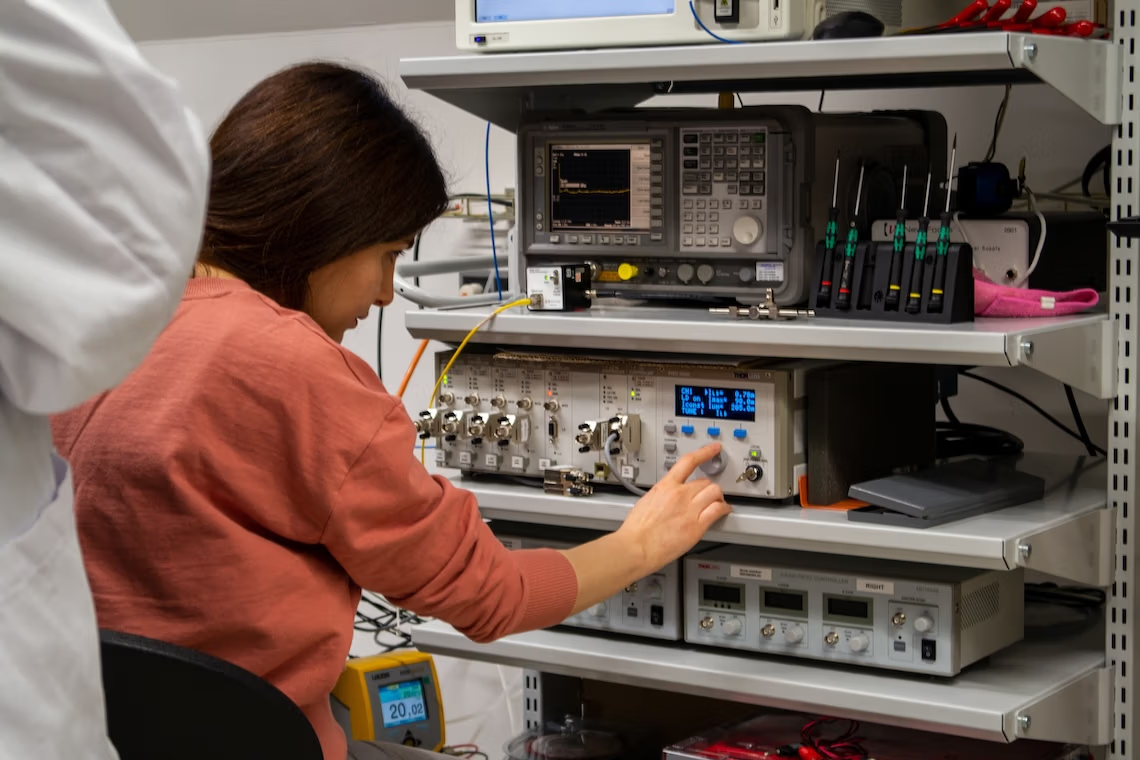
There are many examples of the use of light to characterize the world around us, which we perform in our daily routines. The use of specialized instrumentation to extend the range, acuity, sensitivity, and precision of our vision or to quantitatively use photons of light to determine materials properties is what we call optical characterization.
The course will provide an introductory overview on the main examples of these techniques, with an emphasis on their applicability, usefulness, and limitations. Optical characterization techniques explore the change on intensity, energy, phase, direction, or polarization of the light wave after interaction with the object being studied, giving access to some physical properties of the system. Techniques based on both linear and nonlinear light-matter interactions will be described in detail, from both theoretical and technical point of view.